RAG Security Fundamentals (TryHackMe)

Introduction
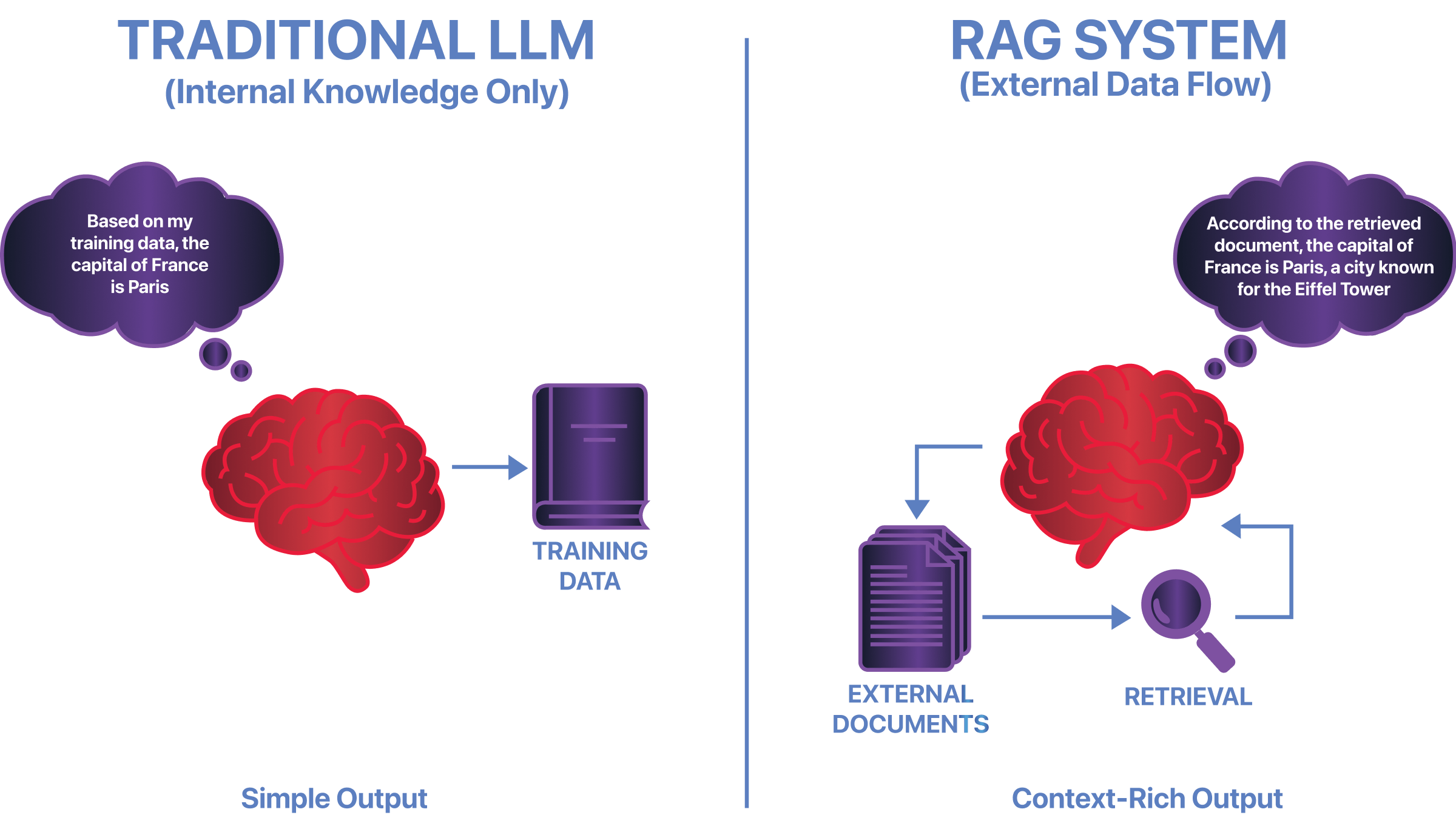
Retrieval-Augmented Generation (RAG) allows language models to use external documents when answering questions. Instead of relying solely on training data, a RAG system retrieves relevant information at inference time and provides it as additional context before generating a response. This improves accuracy and freshness, but it also changes how trust works in the system. This room covers how RAG systems work, where their unique security risks appear, and how attackers exploit retrieval, context injection, and trust boundaries to manipulate model outputs.
Learning Objectives
By completing this room, you will be able to:
Describe how RAG systems work at a high level
Explain why retrieval introduces inference-time risks
Identify concrete security issues specific to RAG
Understand why traditional LLM security assumptions do not fully apply
Prerequisites
Before starting this room, you should be familiar with:
What a Large Language Model (LLM) is
How prompts and responses work in AI systems
Basic security concepts such as trust boundaries and data integrity
No prior RAG experience is required.
RAG Architecture Overview
In a RAG deployment, the application provides retrieved content alongside user input. The model follows the structure of the input it receives, but it does not independently verify whether the retrieved information is correct, safe, or appropriate. This introduces specific security risks.
Because retrieval happens at inference time, malicious or misleading documents can influence responses without retraining the model. This is known as inference-time data poisoning. Retrieved content can also manipulate context by framing information in ways that alter the model's behaviour. In some cases, retrieved documents may contain instruction-like text that overrides system intent, even though the prompt itself was not modified. Securing a RAG system requires controlling how external data is selected, injected, and constrained during retrieval.
To understand where these risks appear, you need to know how a RAG system is structured.
Core Components of a RAG System
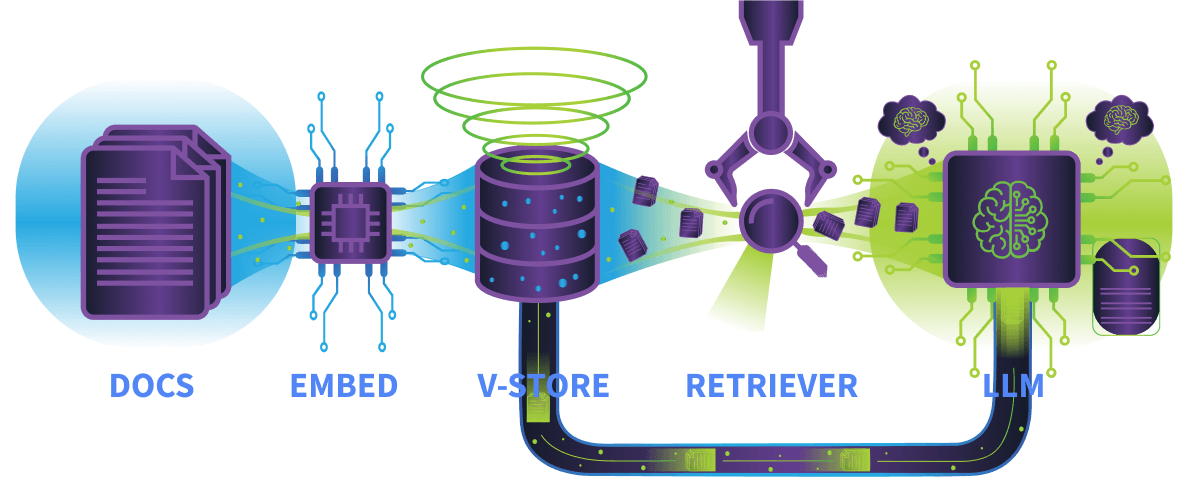
A typical RAG system includes the following parts:
Embedding Model: This model converts text into vectors; both user queries and documents go through this process.
Vector Store: The vector store stores document embeddings; these embeddings represent the meaning of text as numerical values, enabling similarity comparisons.
Retriever: The retriever is responsible for finding relevant documents based on a user’s query, it uses similarity matching rather than exact keywords.
Language Model (LLM): The language model generates the final response using the retrieved documents as context.
How Data Flows Through RAG
A simplified RAG workflow looks like this:
The user submits a query
The query is converted into an embedding
The vector store searches for similar document embeddings
Top matching documents are retrieved
Retrieved content is injected into the LLM’s context
The LLM generates a response
At no point does the model verify whether the retrieved data is correct or safe.
Where Security Risks Concentrate
Although every component matters, risk concentrates in three areas:
Ingestion: Malicious documents entering the system
Retrieval: Poisoned documents ranking highly
Context injection: Retrieved content influencing generation
These areas will be the focus of the practical tasks later in the room.
Answer the questions below
What numerical representation is used to capture the meaning of text in RAG systems? Embeddings
Which component selects the documents for the LLM? Retriever
RAG-Specific Attack Surface
RAG systems introduce several new areas where security failures can occur. Unlike traditional applications, external data is not just stored — it directly influences model reasoning at inference time.
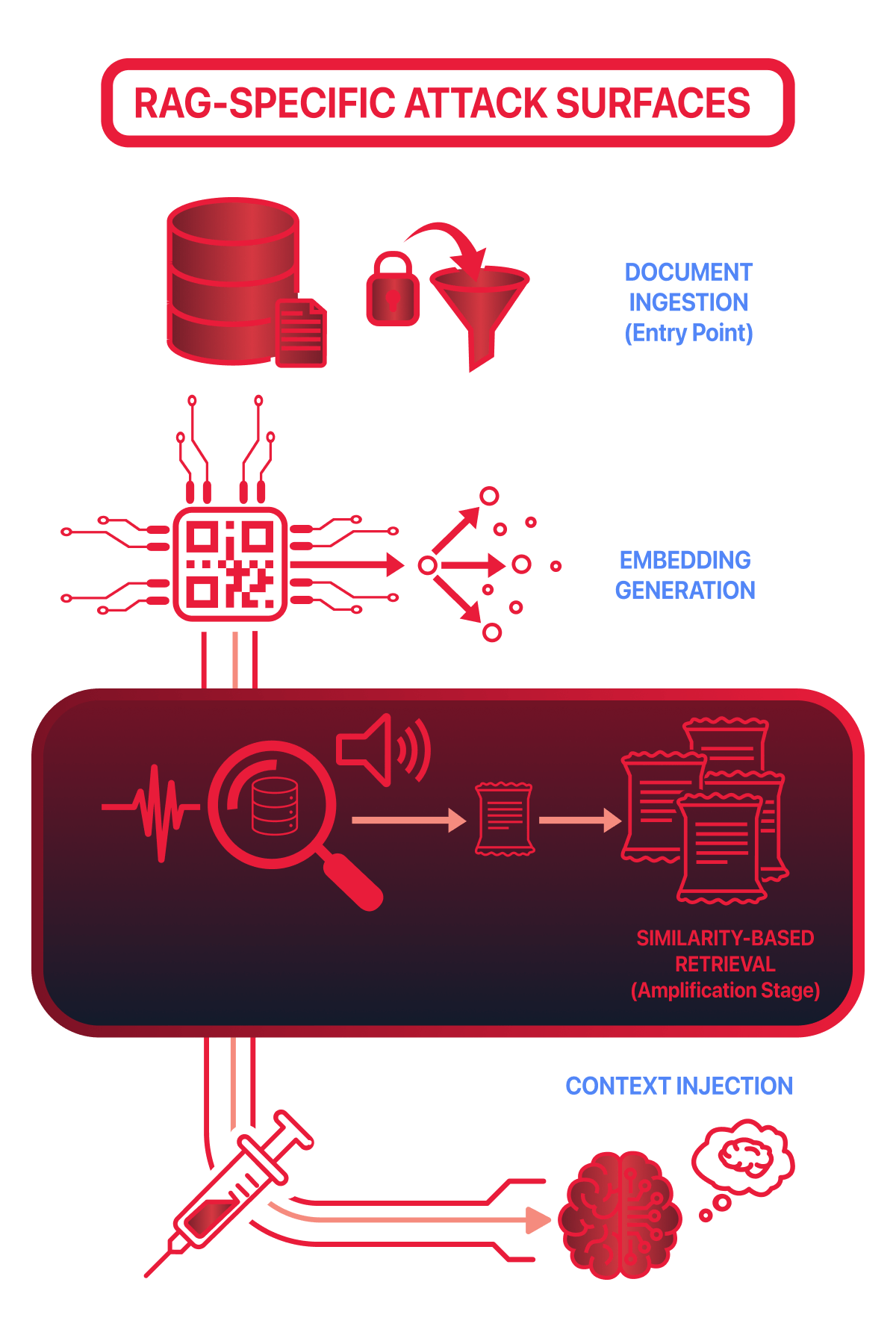
The main RAG-specific attack surfaces are:
Document ingestion: Untrusted, outdated, or malicious documents can enter the system if validation is weak.
Embedding generation: Text is converted into numerical vectors, making intent and safety harder to inspect manually.
Similarity-based retrieval: Documents are selected by semantic relevance, not correctness, trust, or safety.
Context injection: Retrieved documents are injected directly into the model’s context window before generation.
Each stage increases the system’s exposure to manipulation.
**Document Ingestion
**
RAG systems often ingest data from shared drives, wikis, or automated feeds. If validation is weak, untrusted or malicious documents can enter the knowledge base and become treated as trusted information.Embedding Generation
Ingested documents are converted into embeddings. This process removes context such as authorship or approval status, making malicious and legitimate content appear equally valid.
Similarity-Based Retrieval
Documents are retrieved based on semantic similarity, not trust or intent. Attackers only need their content to “sound relevant” to influence retrieval results.
Context Injection
Retrieved documents are injected directly into the model’s prompt. The model cannot distinguish instructions from data, treating all retrieved content as trusted context.
Why Retrieval Is the Highest-Risk Component
Retrieval happens automatically and invisibly to the user. The language model:
Cannot see where the documents came from
Cannot verify document intent
Cannot distinguish instructions from data
Once content is retrieved, it is treated as trusted background information. This makes retrieval one of the most security-critical components in a RAG system.
Answer the questions below
Which RAG stage introduces the largest indirect attack surface? Retrieval
What component is lost during embedding generation that affects security? Context
Retrieval Abuse & Context Manipulation
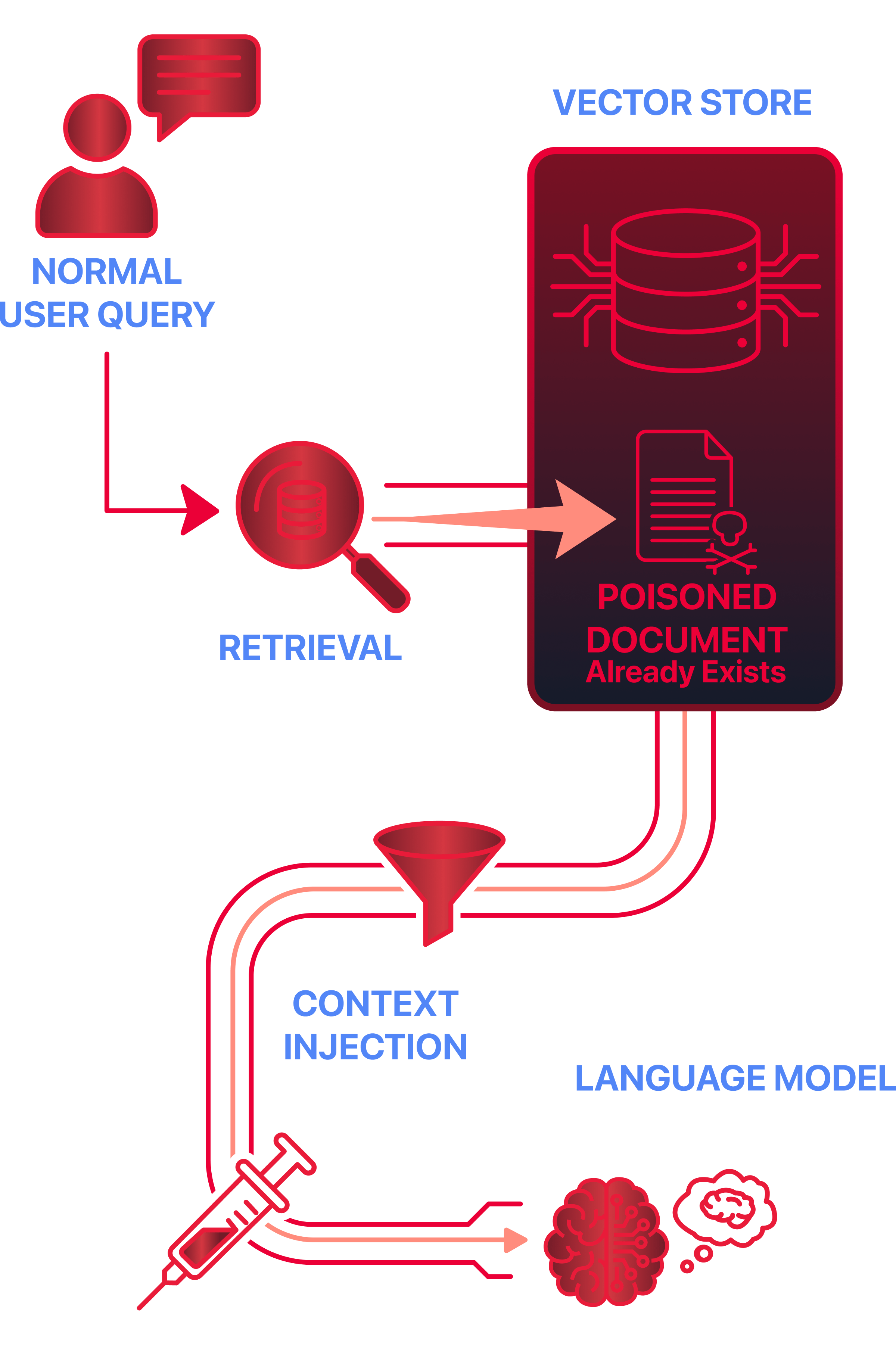
Retrieval abuse is a RAG-specific attack technique in which unintended or malicious documents influence model output via retrieval. This does not always require active manipulation by an attacker. In many cases, a malicious or misleading document is already present in the knowledge base and is retrieved automatically during normal queries. Unlike traditional prompt injection, the attacker does not interact directly with the model’s prompt. Instead, they influence what data the retriever selects.
Active vs Passive Retrieval Abuse
Retrieval abuse can occur in two common ways:
Passive poisoning: Malicious content is ingested once and left in the knowledge base. The attacker waits for normal queries to retrieve it.
Active manipulation: Content is deliberately crafted to rank highly for common or sensitive queries.
In both cases, the attacker does not need continuous access to the system.
How Context Manipulation Works
In RAG systems, retrieved documents are injected into the model’s context window before generation.
Problems arise when a retrieved document:
Contains misleading or false information
Includes hidden instructions framed as documentation
Retrieval selects documents based on semantic relevance, not intent or safety. If a document ranks highly, it is included in the context used for generation.
Why the Model Cannot Defend Itself
From the model’s perspective, all retrieved content looks the same, because the model:
Cannot verify document intent
Cannot see retrieval rankings
Cannot reliably distinguish instructions from data
Once content appears in the context window, it is treated as authoritative input due to placement, not because it has been verified. This is a design limitation, not a configuration mistake.
Why Retrieval Abuse Is Difficult to Detect
Retrieval abuse is difficult to spot because:
Outputs may appear logical and well-structured
No visible prompt injection is present
Logs may only show “relevant documents retrieved.”
From the system’s point of view, retrieval is working as designed.
Security Impact of Context Manipulation
By manipulating retrieval, attackers can:
Influence responses without modifying prompts
Indirectly override system intent
Introduce subtle misinformation or unsafe guidance
This is why retrieval must be treated as a security boundary, not just a performance feature.
Answer the questions below
What retrieval abuse technique involves crafting malicious content so it ranks highly for sensitive queries? Active Manipulation
What does retrieval select documents based on? Semantic Relevance
Real-World RAG Failure Scenarios
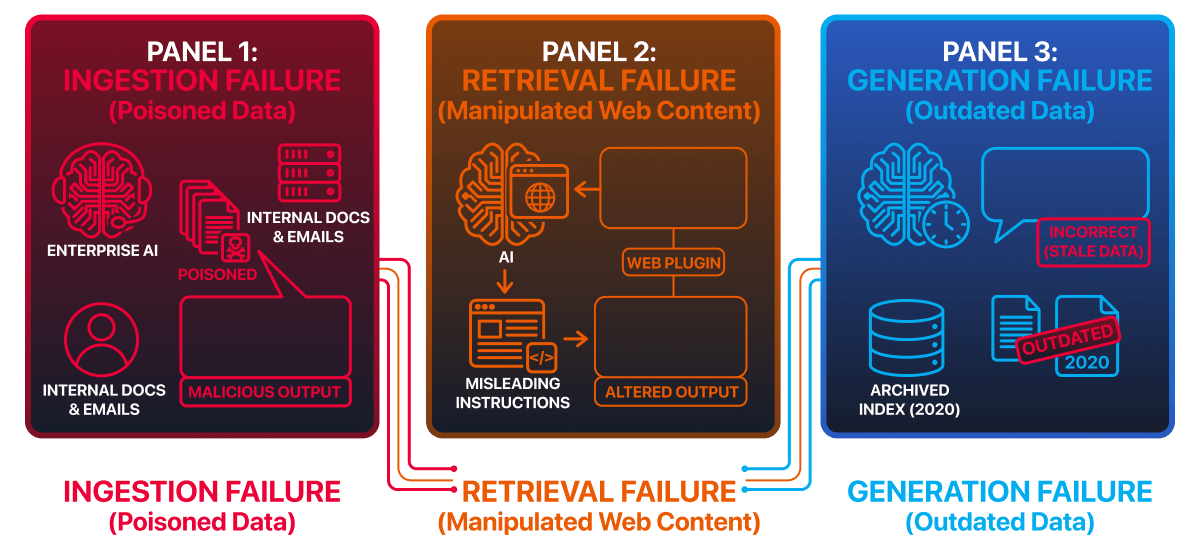
Failures in RAG systems are often subtle. In real deployments, responses may appear logical, well-written, and authoritative — while still being incorrect, unsafe, or misleading. These failures occur when retrieved content influences the model’s output in unintended ways.
The following case studies are based on publicly documented incidents involving deployed AI systems.
Case Study 1: Microsoft Copilot – Email-Based Retrieval Abuse (2026)
Microsoft 365 Copilot (opens in new tab)integrates directly with enterprise email, document, and calendar data to assist users with summarisation and question answering. In 2026, it was demonstrated that content embedded inside emails could be retrieved by Copilot during normal queries and influence its responses — despite not being part of the user’s prompt.
How the Failure Occurred
Emails were treated as valid ingestion sources
Retrieved email content was injected into the model’s context
The model could not distinguish:
Legitimate information
Embedded instructions
Misleading guidance
From the system’s perspective, retrieval and generation worked correctly.
What Went Wrong
Trust was implicitly granted at ingestion
Retrieval surfaced unverified content
Context injection amplified the impact across responses
Impact
Sensitive enterprise information was exposed
Organisations restricted Copilot access
Microsoft issued security guidance and mitigations
This incident demonstrated how internal data sources can still act as an attack vector when retrieval is not treated as a security boundary.
Case Study 2: ChatGPT Plugins – Untrusted External Content (2023)
ChatGPT plugins(opens in new tab) enabled the model to retrieve live data from external services, including web pages and third-party APIs. In multiple cases, retrieved external content contained instruction-like text that influenced the model’s behaviour once injected into the context window. This occurred without modifying the system prompt or model parameters.
How the Failure Occurred
External sources were trusted by default
Retrieved content was injected directly into context
The model followed instructions embedded in retrieved data
This is a clear example of indirect prompt injection via retrieval.
What Went Wrong
No validation of the retrieved content intent
No separation between data and instructions
Retrieval expanded the trust boundary beyond the application
Impact
Unsafe or manipulated outputs
Plugin features temporarily disabled
Retrieval and plugin security models redesigned
Case Study 3: Web-Connected AI Assistants – Stale and Incorrect Retrieval
Several AI assistants that rely on indexed web content have returned outdated or incorrect guidance, even after the original sources were updated. These failures were not caused by attackers, but by governance gaps in retrieval pipelines.
How the Failure Occurred
Documents remained indexed after changes
The retrieval pipeline prioritised semantic relevance over freshness
Outputs were presented as current and authoritative
What Went Wrong
No document lifecycle management within the retrieval pipeline
No freshness or version validation
Retrieval amplified stale content across multiple queries
Impact
Users followed incorrect guidance
Operational and compliance risks increased
Trust in AI systems was reduced
This shows that RAG failures do not require adversaries — poor governance in the retrieval pipeline alone is sufficient.
In these cases:
Documents remained indexed after updates
Retrieval prioritised relevance over freshness
Users received outdated responses presented as current
What went wrong:
No document lifecycle or freshness controls
Retrieval amplified stale content
Outputs appeared authoritative
Why These Failures Are Dangerous
RAG failures are risky because:
Responses appear logical and well-written
There is no visible prompt injection
Users trust AI-generated output
In many cases, the system behaves exactly as designed — but still causes harm.
Answer the questions below
In the Web-Connected AI Assistants cases, failures were caused by governance gaps in what specific part of the system? Retrieval Pipeline
Defensive Considerations for RAG Systems
Detecting RAG abuse is difficult because poisoned or misleading content often looks legitimate.
Retrieved documents:
Are semantically similar to the query
Blend with clean, approved content
Produce outputs that appear logical and well-written
There is no single signal that reliably indicates abuse. In many cases, the system behaves exactly as designed while still producing harmful outcomes. As a result, detection often relies on observing how the system behaves over time rather than identifying a single malicious input.
Guardrails on Retrieved Content
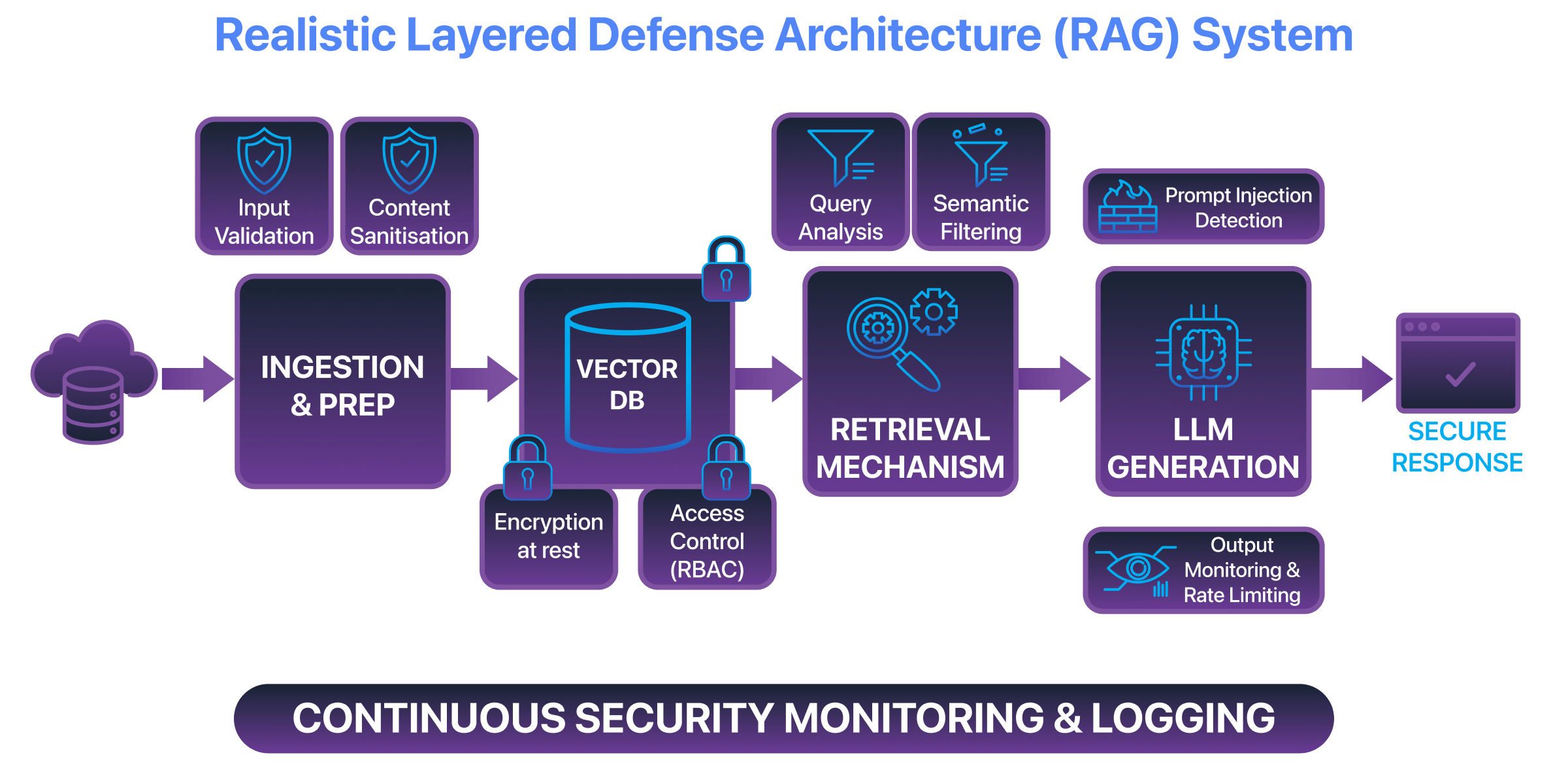
Guardrails aim to limit how retrieved content can influences the model.
Common approaches include:
Limiting how retrieved text is inserted into prompts
Separating retrieved data from system instructions
Applying heuristics to flag instruction-like patterns
However, these controls are imperfect. Instruction-like language is often ambiguous, and attackers can rephrase or obfuscate content to bypass simple checks. Guardrails reduce risk, but they do not guarantee safety.
Validation During Ingestion
Strong ingestion controls prevent many issues before retrieval occurs.
Effective validation includes:
Reviewing document sources
Enforcing approval workflows
Tracking ownership and update history
Once untrusted data enters the vector store, detection becomes significantly harder and more resource-intensive.
Monitoring and Output Review
Even with guardrails and validation, failures can still occur.
Monitoring should focus on behavioural signals such as:
Unusual retrieval patterns
Repeated retrieval of the same documents
Gradual changes in response tone or behaviour
These gradual changes are often referred to as output drift — a slow shift in how the system responds over time. Output drift is a key warning sign of poisoning, as it reflects gradual influence from malicious or misleading data rather than a sudden failure.
Behavioural monitoring is often the most effective way to detect RAG poisoning, as it captures subtle, long-term deviations that other controls may miss.
Regular review helps detect subtle, long-term influences that automated controls may miss.
Why Defence Must Be Layered
No single control fully protects a RAG system.
Effective defence requires overlapping safeguards that:
Reduce the likelihood of successful abuse
Limit the impact of failures
Detect problems early
RAG security depends on defence-in-depth, not on a single protective mechanism.
Answer the questions below
What type of monitoring is a useful way to detect RAG poisoning? Behavioural
What does output drift reflect instead of a sudden failure? Gradual Influence
Conclusion
Retrieval-Augmented Generation changes how trust operates in AI systems by allowing external data to influence model outputs at inference time. While this can improve relevance in some scenarios, it also introduces new security risks when retrieved content is untrusted, manipulated, or poorly governed.
In this room, you learned that retrieval acts as a critical trust boundary, enabling indirect prompt injection, retrieval poisoning, and subtle manipulation without interacting with the user prompt.
Key Takeaways
RAG systems expand the attack surface beyond traditional inputs
Retrieval can amplify risk even when systems behave “as designed”
Security failures often occur silently, without obvious errors
Framework Perspective
The risks explored in this room align with how modern AI security frameworks model retrieval-driven failures.
OWASP Top 10 for LLM Applications
LLM01 – Indirect Prompt Injection: Retrieved content can influence model behaviour without direct access to the prompt.
LLM04 – Data & Model Poisoning: Inference-time poisoning occurs when untrusted or stale data is retrieved and amplified.
LLM07 – Insecure Model Monitoring: RAG failures often remain undetected without retrieval and output monitoring.
NIST AI Risk Management Framework
Map: Identify dependencies on internal and external knowledge sources.
Measure: Evaluate how retrieved data affects outputs.
Manage: Apply controls across ingestion, retrieval, and monitoring.
EU AI Act
Article 9: Risk management for system behaviour.
Article 10: Data governance, quality, and lifecycle management.
Across all frameworks, retrieval risks are treated as system-level trust failures rather than model defects.